The product records leather, model, hardware and lining.
← All industries
Leather goods
From quote to delivery for leather goods
Leather consumption and hardware are estimated, and on small runs the margin vanishes without explanation.
What changes
Unit price is per leather type.
Monogramming and personalisation are cost lines.
Your stages, ready configured
The account starts with these production stages. Change them any time from Settings.
- 1Cutting
- 2Skiving
- 3Stitching
- 4Hardware
- 5Finishing
Every stage records who worked on it, and when.

What it looks like on the shop floor
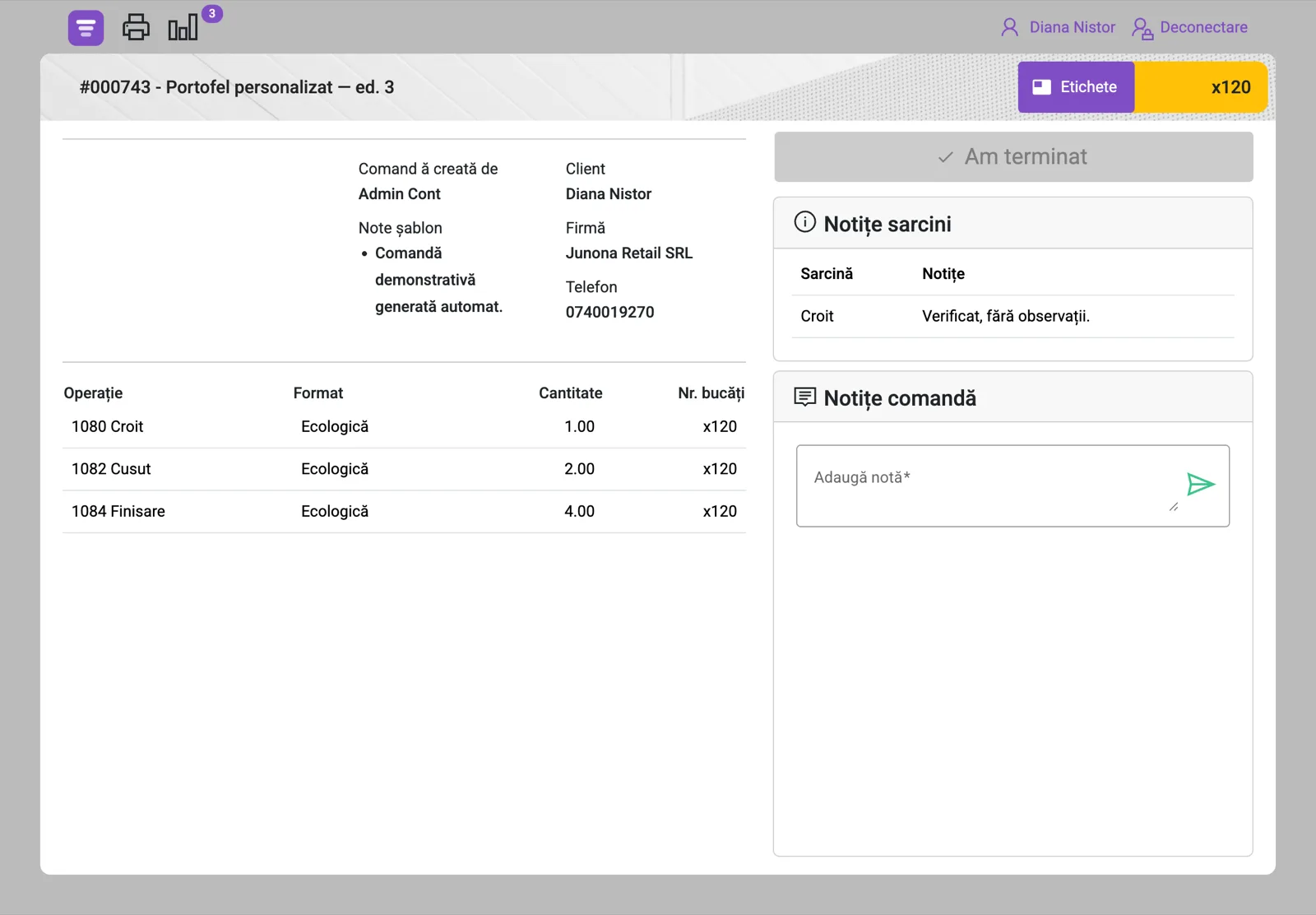
The operator interface is not the manager’s. A worker does not see the whole company — they see their own queue and two buttons.
A tablet at cutting and one at stitching. The craftsman signs in with a PIN and sees only the pieces that reached them, with the leather, the thread colour and the hardware. Personalised orders carry the requested monogram.
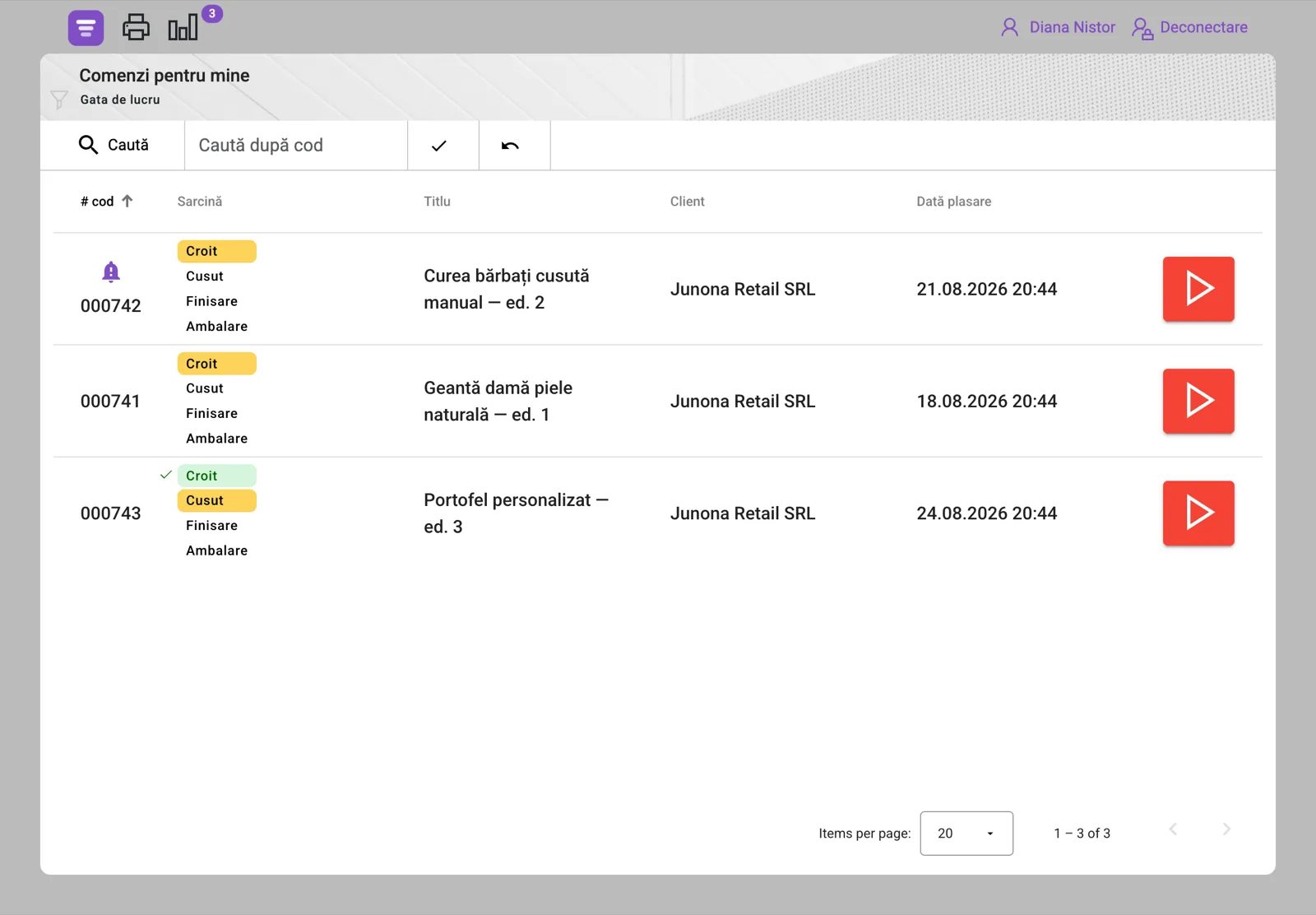
A tablet in the workshop, a PIN for each person
You do not need a computer at every station. A cheap tablet on the wall, next to the machine, is enough.
- The operator signs in with a four-digit PIN — no email, no password typed with dirty hands.
- They see only the jobs that reached their stage. Nobody has to tell them what is next.
- Two buttons: “In progress” when they start, “Done” when they finish.
- The job moves to the next stage on its own and appears in the next person’s list.
- The system records who worked and at what time — no handwritten timesheet.
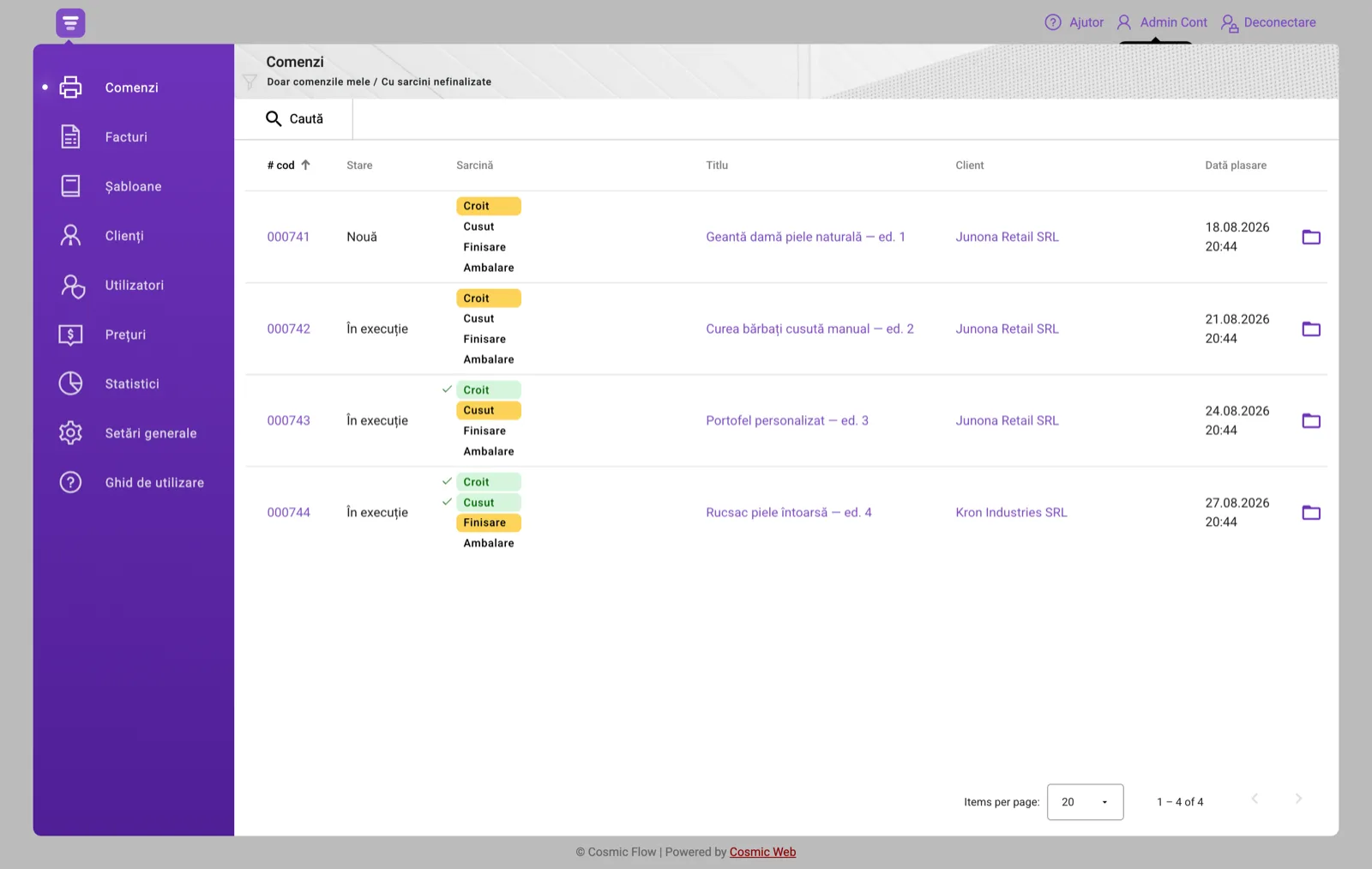
Order status, live
On a run of 25 bags you can see how many are cut, stitched and finished. A corporate client who needs them for an event gets a firm date.
A concrete example
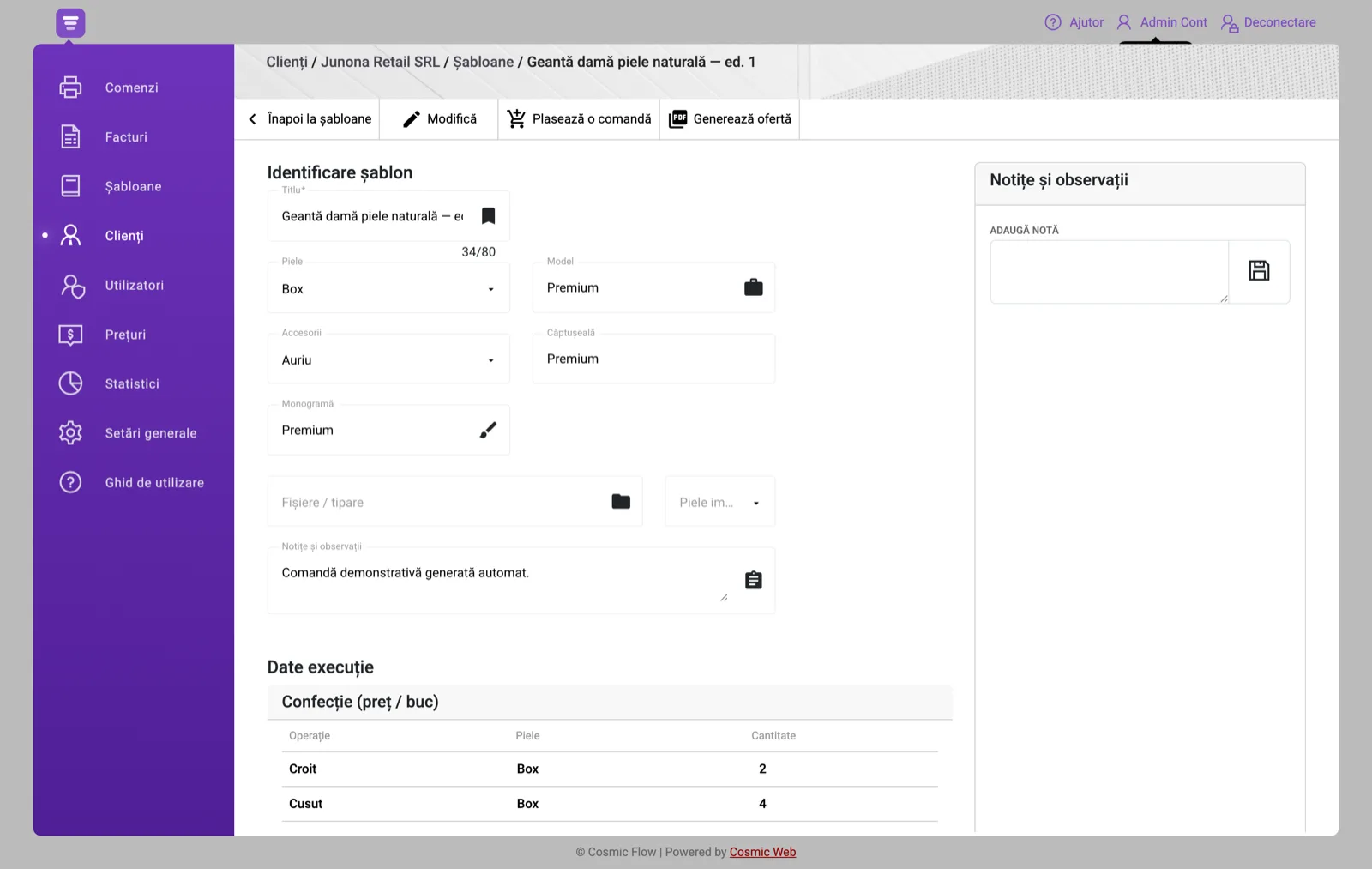
A run of 25 vegetable-tanned bags with monogramming. The product is defined once, and personalisation is priced in automatically.
- Unit of measure
- piece count
- Stages configured
- 5
Four things you will notice immediately
- A model is defined once — leather, dimensions, hardware, lining — and the next run starts from it.
- Price per piece comes from your own grid, per leather, so vachetta and suede stop being quoted alike.
- Personalisation is its own stage, with its own cost.
- You can see leather consumption per model, so you know what your margin really is.

Your customers can see their own orders and invoices
Every customer can be given an account. They sign in at the same address you do and see exactly what concerns them — their orders, the stage each one has reached, the quotes they were sent, and their invoices including anything unpaid.
- They see only their own orders and documents — never another customer’s.
- They can download a quote or an invoice as a PDF instead of calling you for a copy.
- They see the stage each order has reached — the same information you see.
- The account is optional: a customer with no email address stays in the register, simply without access.
What if that customer already has an account with another company?
One email address has exactly one account across the whole platform — that is what makes signing in unambiguous. If the address is already in use by another company, the app tells you so plainly when you save, and you have two options: use a different address for this customer (the contact person who deals with you, for instance), or leave the field empty — the customer stays in your register, with orders and invoices, just without app access. Your data is never visible to the other company.
What it does
Reusable templates
Define a product once — with your trade’s own fields — and run any number of orders from it.
Your own price grid
Operations down, variants across, a price in every cell. Quotes become consistent.
Production stages
Each order moves through your stages. Operators pick up and complete; the system records who and when.
Invoices and proformas
Automatic per-series numbering that never repeats. Outstanding balances in one click.
Production reporting
What was made, by whom, in what quantity, and where the flow is getting stuck.
Configured per trade
Fields, stages and the price grid arrive ready for the work you actually do.
Try it on your own jobs
The account takes two minutes to create and arrives configured for this trade.